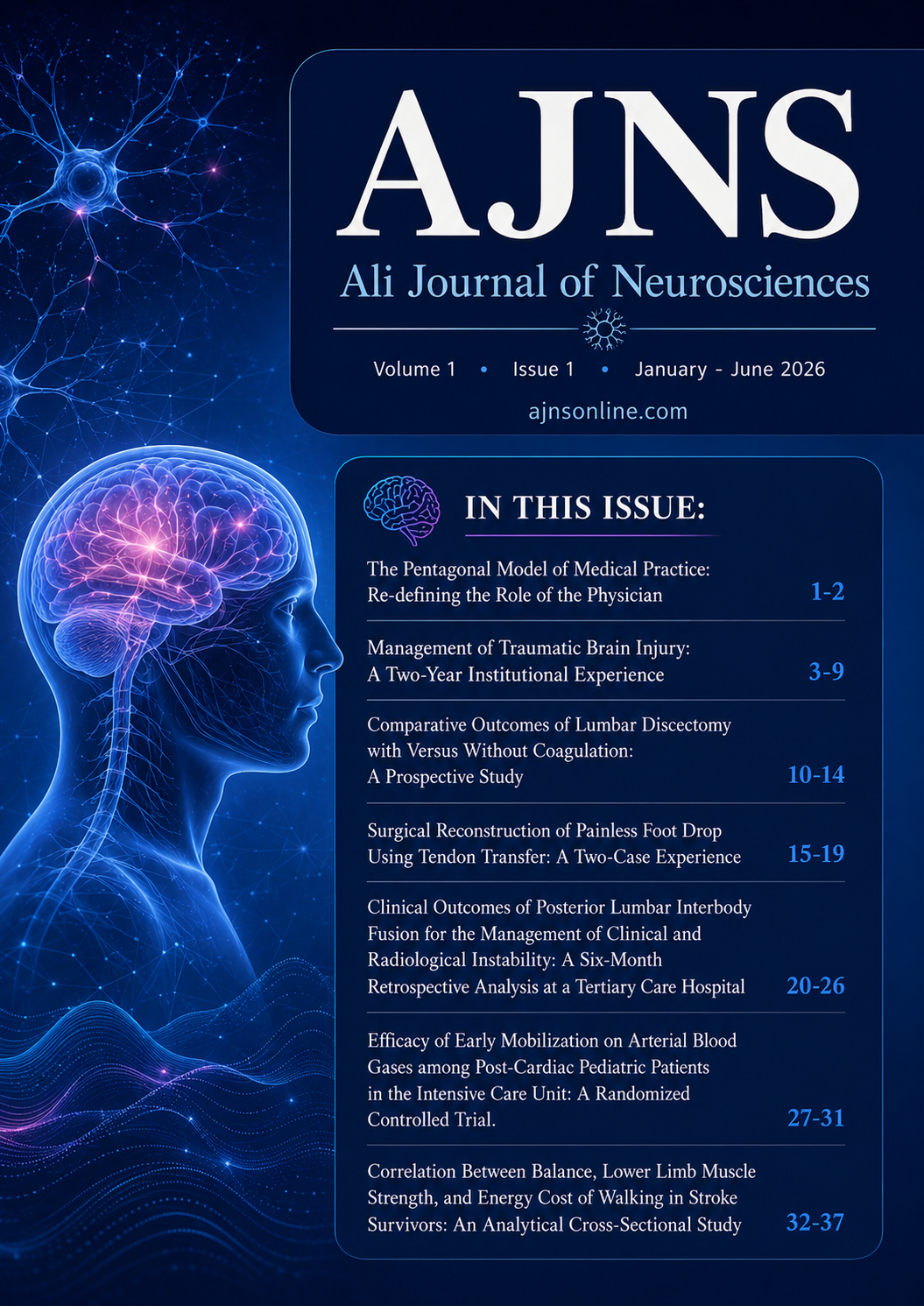
Comparative Study of Lumbar Disc Prolapse Surgery with or Without Coagulation
Keywords:
lumber disc surgery, coagulationAbstract
Background: Lumbar disc prolapse is a common cause of back pain and neurological deficits, often requiring surgical intervention when conservative management fails. Although coagulation is routinely used during lumbar discectomy to control bleeding, excessive thermal exposure may cause tissue injury and negatively influence postoperative recovery. With the availability of alternative hemostatic techniques, the necessity of routine coagulation remains debatable.
Objective: To compare the surgical and functional outcomes of lumbar disc prolapse surgery performed with and without coagulation.
Methods: This prospective comparative study was conducted at the Department of Neurosurgery Gajju Khan Medical College (GKMC), Swabi, Pakistan. from October 2022 to October 2025. A total of 120 patients with primary lumbar disc prolapse refractory to conservative treatment were enrolled and divided into two equal groups. Group A underwent lumbar discectomy with coagulation, while Group B underwent discectomy without coagulation using alternative hemostatic methods. Outcomes assessed included operative time, intraoperative blood loss, postoperative pain using the Visual Analog Scale (VAS), functional outcome using the Oswestry Disability Index (ODI), duration of hospital stay, and complications. Follow-up was carried out up to six months postoperatively.
Results: Baseline demographic and clinical characteristics were comparable between the two groups. Mean operative time was significantly shorter in the non-coagulation group (78.6 ± 9.7 minutes vs. 84.2 ± 10.8 minutes; p = 0.012). Intraoperative blood loss was slightly higher in Group B but not statistically significant (p = 0.24). At six months, Group B demonstrated significantly lower VAS scores (1.8 ± 0.6 vs. 2.3 ± 0.7; p = 0.004) and better ODI scores (18.9 ± 4.3 vs. 22.8 ± 5.1; p = 0.001). Hospital stay and complication rates were similar between both groups.
Conclusion: Lumbar discectomy performed without coagulation is a safe and effective alternative to conventional coagulation-assisted surgery. It is associated with shorter operative time, faster pain relief, and superior functional recovery without increasing blood loss or complication rates. These findings support minimizing routine coagulation in lumbar disc prolapse surgery to reduce thermal tissue injury and enhance postoperative outcomes.